Innovative self-healing
strategy for electric
vehicle batteries
Heal-BEV
Development of advanced control strategies to improve the health of electric vehicles batteries
Challenges
Extension of the batteries’ lifetime
The extension of the batteries’ lifetime is an issue that has key role in the viability of the electric vehicle concept, and it can stimulus its widespread with considerable social, environmental, and economic impact. The obvious way to attain this goal may be the improvement of the electrochemical structure of the battery cells. However, this may increase the construction cost that may have the opposite result with respect to the initially expected impact of the widespread of the electric vehicles.
Healing of battery cells
Τhe healing of battery cells through the proper control and without affecting the manufacturing cost can provide considerable advantages to the battery storage system, i.e. extension of the potential lifespan, enhancement of the fast-charging capabilities, and improvement of the reliability and dynamic performance, that are important challenges for an electric vehicle. Moreover, the supercapacitors can play a critical assistant role in the healing process of the battery cells by providing emergency energy to any problematic battery cells and support to the equalization procedure.
Challenge
Battery lifetime extension: a key
enabler for electric vehicle success
The market penetration of electric vehicles is hindered by the customer concerns about the limited battery lifetime and high replacement costs. Automotive battery degradation over time is hard to prevent due to inherent material limitations; it is also hard to predict because the degradation mechanisms are not completely understood.
❝ Instead of developing completely new battery materials, we
can extend the lifetime of existing ones by smarter controls,
provided that we understand the underlying physics❞
Ambition
Research on new active materials is already bringing improvements in terms of battery lifetime characteristics. However, these improvements come with trade-offs regarding performance, energy density and costs. More importantly, any breakthrough in active material technology requires huge re-investments and long times-to-market that are usually unacceptable in the competitive automotive market.
On the other hand, the healing of battery cells through the proper control will not affect the manufacturing cost and it can give considerable advantages to the battery storage system, i.e. extension of the potential lifespan, enhancement of the fast-charging capabilities, and improvement of the reliability and dynamic performance, that are important challenges for an electric vehicle.
Moreover, the supercapacitors can play a critical assistant role in the healing process of the battery cells by providing emergency energy to any problematic battery cells and support to the equalization procedure.
Aim of the project
The research aims to develop a new method to slow down the aging process and extend the lifespan of lithium-ion batteries used in electric vehicles. This method should be versatile enough to work with both current and future lithium-based battery technologies.
Control Method for Battery Cell Equalization and Performance Enhancement
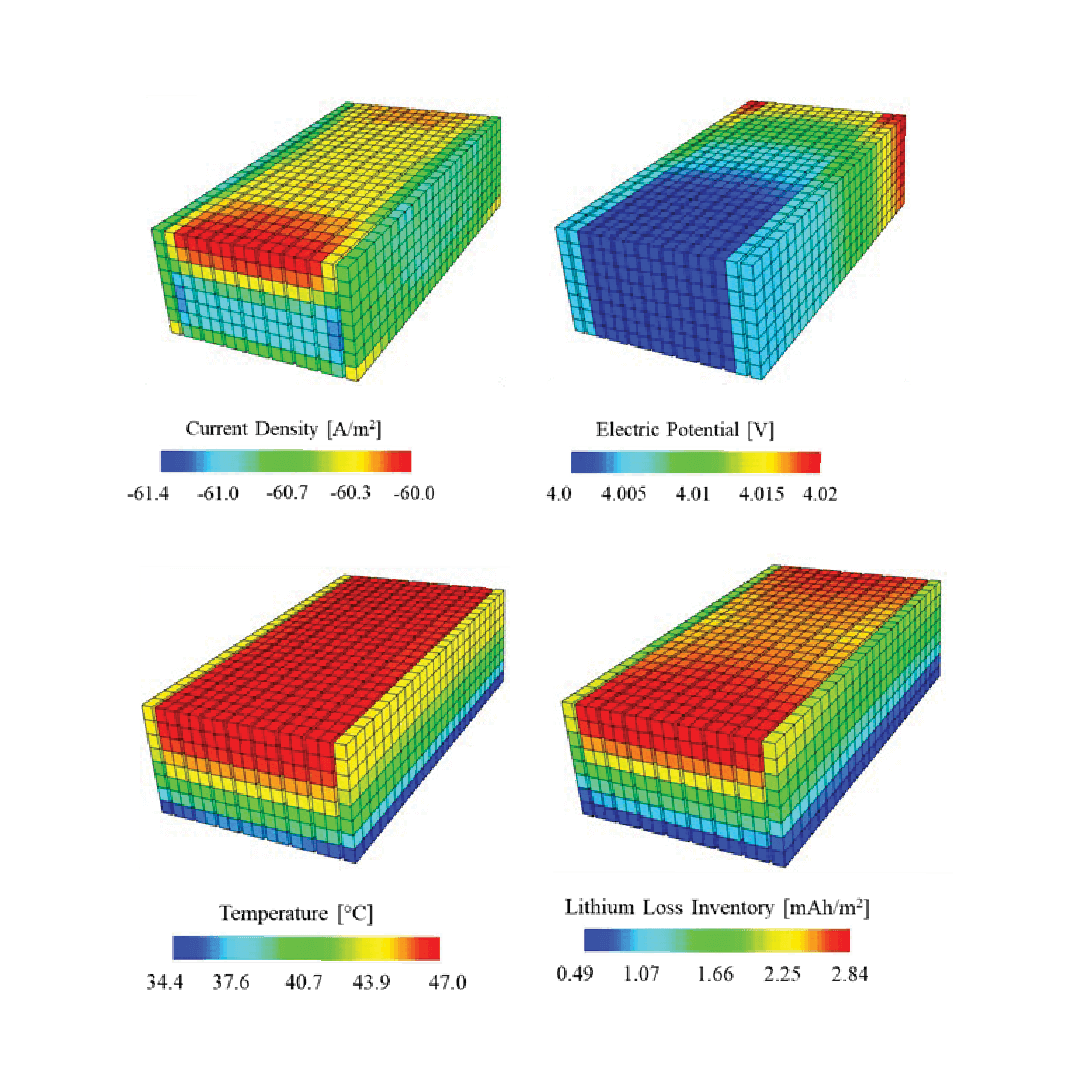
Develop high-fidelity models of battery ageing physics based on lab tests.
Develop a real-time control method to monitor graphite anode plating and stripping.
Optimize charging
and discharging
processes to
improve battery cell
equalization.
Utilize supercapacitors for battery cell equalization and vehicle performance booster.
Work Plan
Project management
Theoretical investigation and development of the healing control algorithm
Simulation analysis of the healing control algorithm
Development of the healing control software and validation in the simulation model
Construction of the laboratory healing control system and the emulator of electric vehicle systems
Validation of the laboratory lithium battery healing control system in the electric vehicle & battery storage system emulator
Dissemination and Communication Management
Publications
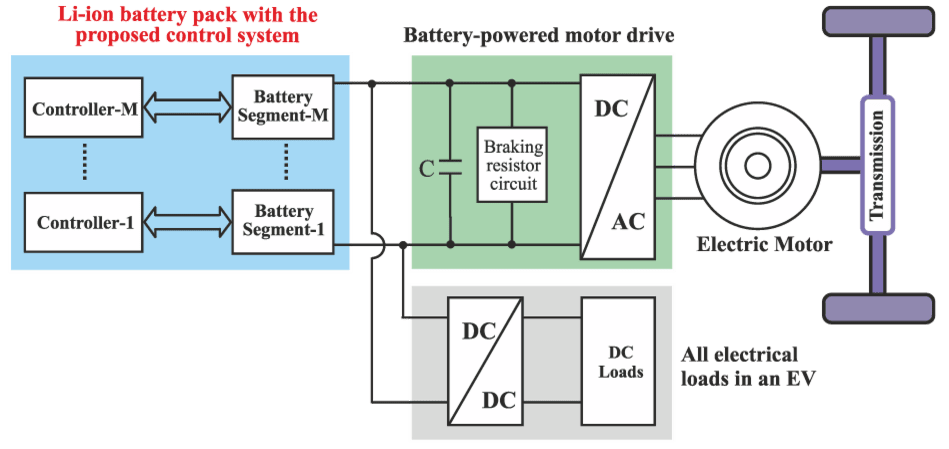
N. Jabbour, E. Tsioumas, D. Papagiannis, M. Koseoglou, and C. Mademlis, “An Improved Equalization and Energy Support Strategy for Battery Powered Electric Motor Drives”, IEEE Trans. on Transportation and Electrification, July 2024
C. Mademlis, N. Jabbour, E. Tsioumas, and D. Papagiannis, “Enhanced Performance DC Microgrid Control Scheme with Li-ion Battery System for Electric Vehicle Applications”, in IEEE Int Conf. ICDCM’2024, Columbia, USA, Aug. 2024.
E. Tsioumas, N. Jabbour, and C. Mademlis, “Combined Scheme of Lithium-ion Battery Equalization with Energy Support Capabilities for Electric Vehicle Applications”, in IEEE Int Conf. PCIM-Asia’2024, China, Aug. 2024.
G. Koltsakis, D. Besinas, A. Kanatas, Spyridopoulos, S. et al., "Modeling the Impact of Thermal Management on Time and Space-Resolved Battery Degradation Rate," SAE Technical Paper 2024-01-2675, 2024.
N. Jabbour, E. Tsioumas, D. Papagiannis, M. Koseoglou, and C. Mademlis, “An Improved Equalization and Energy Support Strategy for Battery Powered Electric Motor Drives”, IEEE Trans. on Transportation and Electrification, July 2024
C. Mademlis, N. Jabbour, E. Tsioumas, and D. Papagiannis, “Enhanced Performance DC Microgrid Control Scheme with Li-ion Battery System for Electric Vehicle Applications”, in IEEE Int Conf. ICDCM’2024, Columbia, USA, Aug. 2024.
E. Tsioumas, N. Jabbour, and C. Mademlis, “Combined Scheme of Lithium-ion Battery Equalization with Energy Support Capabilities for Electric Vehicle Applications”, in IEEE Int Conf. PCIM-Asia’2024, China, Aug. 2024.
G. Koltsakis, D. Besinas, A. Kanatas, Spyridopoulos, S. et al., "Modeling the Impact of Thermal Management on Time and Space-Resolved Battery Degradation Rate," SAE Technical Paper 2024-01-2675, 2024.
G. Koltsakis, S. Spyridopoulos, P. Chatziioannou, and M. Tentzos, “Development and Parameterization of a Physics-Based
Ageing Model for Li-Ion Battery Cells”, SAE International, Sept. 2025.
N. Jabbour, E. Tsioumas, and C. Mademlis, “A Flexible Operated Li-ion Battery Management System for Motor Drives in Electric Vehicle Applications”, in Proc. PCIM-Asia’2025, China, Sept. 2025.
This project is carried out within the framework of the National Recovery and Resilience Plan Greece 2.0 funded by European Union-NextGenerationEU (H.F.R.I. Project Number: 16202)’
Contact Us
EMLab
LAT
Prof. Christos Mademlis
mademlis@auth.gr
+ 30 2310 996 234
Laboratory of Electrical Machines, Aristotle University of Thessaloniki, 54124, Greece
Prof. Grigorios Koltsakis
grigoris@auth.gr
+ 30 2310 99 58 70
Laboratory of Applied Thermodynamics Aristotle University of Thessaloniki, 551 33, Greece